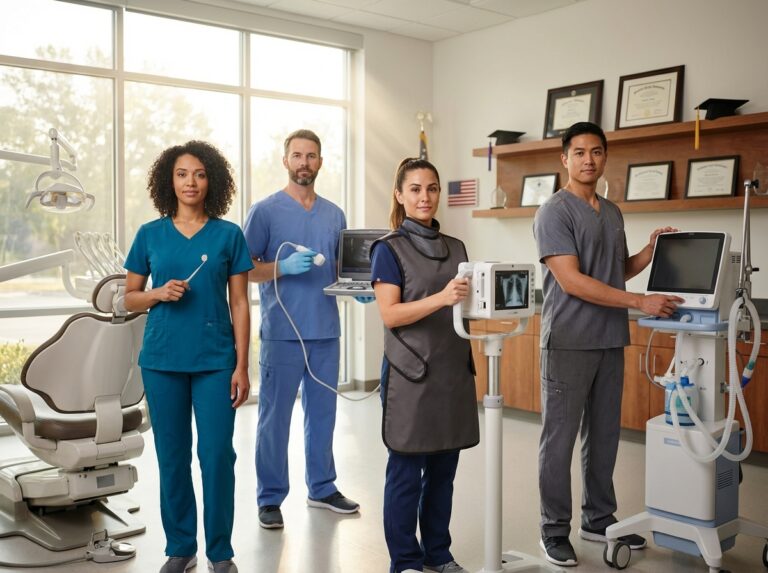
Healthcare professionals in allied fields face heavy student debt but can access multiple loan forgiveness and repayment options. This guide explains federal programs like Public Service Loan Forgiveness and income-driven repayment, HRSA and Nurse Corps service repayment, state programs, and practical steps allied health workers can take to determine eligibility and maximize benefits.
Understanding the Loan Forgiveness Landscape for Allied Health
Navigating the world of student loan forgiveness can feel overwhelming, but for allied health professionals, understanding the landscape is the first step toward finding significant financial relief. Your career path, from the type of facility you work in to the state you practice in, directly influences which programs you can access. The journey begins not with your job, but with the type of student loans you hold.
Your Loans Determine Your Options
Before you can explore forgiveness programs, you must know what kind of federal student loans you have. This is the single most important factor determining your eligibility. You can find this information by logging into your account on the official Federal Student Aid website. There are three main types you might encounter.
- Direct Loans
This is the most common type of federal loan issued since 2010. If you have Direct Loans, you are in the best position to qualify for programs like Public Service Loan Forgiveness (PSLF). They are the gold standard for federal forgiveness options. - Federal Family Education Loan (FFEL) Program Loans
These loans were issued by private lenders but guaranteed by the federal government. The program ended in 2010. FFEL loans, in their original state, do not qualify for PSLF. This is a critical distinction that trips up many borrowers. - Perkins Loans
These were low-interest federal loans for students with exceptional financial need, made through a school’s financial aid office. This program ended in 2017. Like FFEL loans, they are not directly eligible for PSLF but have their own unique cancellation provisions for certain professions.
If you have FFEL or Perkins Loans, you can make them eligible for PSLF by consolidating them into a new Direct Consolidation Loan. This process combines your old loans into a single new one that has the “Direct Loan” name, opening up new forgiveness possibilities. Under current rules, a new consolidated loan receives a weighted average of the payments made on the underlying loans, so you may not lose all of your prior progress. However, consolidation is a permanent step, so it’s crucial to understand the pros and cons before proceeding.
The Main Routes to Loan Forgiveness and Repayment
Think of loan relief as a set of different paths. Which one you take depends on your loans, your employer, and your career goals. Here’s a high-level look at the primary options available.
Public Service Loan Forgiveness (PSLF)
This is one of the most powerful programs for allied health professionals. PSLF forgives the remaining balance on your Direct Loans after you have made 120 qualifying monthly payments while working full-time for a qualifying employer. The key here is the employer, not your specific job title. A radiology technician at a nonprofit 501(c)(3) hospital or a government-run clinic (like a VA hospital) would be on the right track. That same technician working at a for-profit imaging center would not be eligible for PSLF. Full-time work is generally defined as an average of 30 hours per week, and you can even combine hours from multiple part-time jobs at qualifying employers to meet the requirement.
Income-Driven Repayment (IDR) Forgiveness
This is a long-term strategy available to any federal student loan borrower, regardless of their employer. IDR plans (like SAVE, PAYE, IBR) set your monthly payment based on your income and family size. If you remain on an IDR plan, any remaining loan balance is forgiven after 20 or 25 years of payments. For a medical assistant whose income might not be high enough to aggressively pay down their loans, an IDR plan provides an affordable monthly payment and a light at the end of the tunnel, even if they work in the private sector.
Service-Based Loan Repayment Programs
These programs are a direct exchange: you commit to working in a high-need area for a set period, and in return, a program pays a significant portion of your student loans. These are not technically “forgiveness” but rather “repayment assistance.” The most prominent federal examples are the National Health Service Corps (NHSC) Loan Repayment Program and the Nurse Corps Loan Repayment Program. While “Nurse Corps” is in the name, some allied health roles that support nursing functions may be eligible depending on the facility’s needs. The NHSC is broader and often includes roles like physician assistants, but eligibility for other allied health roles can vary by year and program focus. These programs often require work in designated Health Professional Shortage Areas (HPSAs).
State Loan Repayment Programs (SLRPs)
Many states offer their own loan repayment programs to address specific healthcare shortages within their borders. These are incredibly valuable but vary widely. A state might offer repayment assistance for respiratory therapists who agree to work in a rural hospital for two years, for example. Eligibility is tied to your profession, licensure, and commitment to a specific location or type of facility within that state. You must check with your state’s department of health to find current offerings.
Employer-Based Repayment Assistance
A growing number of employers, particularly large hospital systems, offer student loan repayment assistance as a hiring and retention incentive. This is a direct employee benefit, like a 401(k) match. It’s not forgiveness, but it can provide thousands of dollars per year toward your loans. This is often the only option for allied health professionals working in the for-profit sector. This can be a great strategy to combine with federal programs; for example, you can use money from your employer’s loan repayment assistance program (LRAP) to make your monthly payments under an IDR plan, and those payments will still count toward PSLF or IDR forgiveness. Always ask about this during job negotiations.
Always Check the Source and Stay Current
The rules for these programs can and do change. Waivers expire, legislation is updated, and funding for state programs can fluctuate. Your most reliable sources of information are always the official government websites. For federal programs like PSLF and IDR, the Department of Education’s Federal Student Aid site is the definitive source. For service-based programs, the Health Resources and Services Administration (HRSA) website is essential. Before making any decisions, especially about loan consolidation, verify the current rules and requirements directly from these sources.
Federal Programs and How Allied Health Workers Can Qualify
Navigating federal loan forgiveness programs can feel like a second job, but for allied health professionals, understanding the rules is the key to unlocking significant financial relief. These programs are designed to reward public service and provide a safety net for those with high debt-to-income ratios. Let’s break down the main federal options and how you can make them work for you.
Public Service Loan Forgiveness (PSLF) The Ten-Year Path
PSLF is the most talked-about program for a reason. It offers complete, tax-free forgiveness after a decade of service. As an allied health professional, your eligibility hinges less on your specific job title and more on who signs your paycheck. The program has three core requirements you must meet simultaneously.
- Qualifying Employer
You must work full-time for a qualifying employer. This includes government organizations at any level (federal, state, local, or tribal) and not-for-profit organizations that are tax-exempt under Section 501(c)(3) of the Internal Revenue Code. For many of you, this means working at a nonprofit hospital, a VA medical center, a community health clinic, or a public school system. A common pitfall is assuming a hospital is a nonprofit; many large healthcare systems operate as for-profit entities and do not qualify. You must be directly employed, as contract work usually doesn’t count. Full-time is defined as working an average of at least 30 hours per week, which can be met by combining multiple part-time jobs at qualifying employers. - Qualifying Loans
Only Federal Direct Loans qualify for PSLF. If you have older Federal Family Education Loan (FFEL) Program loans or Federal Perkins Loans, you must consolidate them into a Direct Consolidation Loan to make them eligible. A word of caution: while consolidating is often necessary, it’s important to understand how it affects your payment count. - Qualifying Payments
You must make 120 separate, on-time monthly payments. These payments must be made under a qualifying repayment plan, which means an Income-Driven Repayment (IDR) plan. The most common qualifying plans are Saving on a Valuable Education (SAVE), Pay As You Earn (PAYE), and Income-Based Repayment (IBR). A qualifying payment must be for the full amount due as shown on your bill; paying more than your required amount will not help you qualify faster, as only one qualifying payment can be made per month.
PSLF in Action An MRI Technologist’s Story
Imagine an MRI technologist working 40 hours a week at a large nonprofit hospital system. They have $60,000 in a mix of Direct and FFEL loans. To pursue PSLF, their first step is to consolidate the FFEL loans into a Direct Consolidation Loan. Next, they enroll in the SAVE plan to ensure their monthly payments are affordable and count toward forgiveness. Each year, they use the PSLF Help Tool on the Federal Student Aid website to complete and submit the PSLF form, certifying their employment. After making 120 qualifying payments over 10 years, their remaining loan balance is forgiven. The impact of this program is massive; the PSLF program accounts for a large share of debt forgiveness, demonstrating its power for public service workers.
Income-Driven Repayment (IDR) Forgiveness The Long-Term Safety Net
What if you work for a for-profit hospital or a private physical therapy clinic? PSLF is off the table, but IDR forgiveness is not. This path offers forgiveness after 20 or 25 years of payments, regardless of your employer. All IDR plans (SAVE, PAYE, IBR, ICR) have a provision that forgives any remaining loan balance after you’ve made payments for a set period.
Eligibility and Timelines
The timeline depends on your loans and the plan you choose. Generally, if you have only undergraduate loans, your balance is forgiven after 20 years (240 payments). If you have any graduate loans, the timeline extends to 25 years (300 payments). Your monthly payment is calculated based on your income and family size, which can make it a manageable option even on a modest salary. Your loan servicer’s website and your account on StudentAid.gov will show an official count of your qualifying payments toward IDR forgiveness.
IDR in Action A Respiratory Therapist’s Plan
Consider a respiratory therapist working at a for-profit specialty clinic. They have $45,000 in federal loans from their associate’s degree. Since their employer doesn’t qualify for PSLF, they enroll in the SAVE plan. Their monthly payment is capped at a small percentage of their discretionary income, making it affordable. They recertify their income and family size each year. After making payments for 20 years, the remaining balance on their loans will be forgiven.
Important Notes on Past Waivers and Perkins Loans
You may have heard about major waivers that temporarily changed the rules. The Limited PSLF Waiver (expired October 2022) and the IDR Account Adjustment (payment count adjustments mostly completed by mid-2024) were game-changers. Many healthcare workers were able to benefit from these one-time opportunities that allowed more past payments and periods of forbearance to count toward forgiveness. While these specific waivers have ended, they highlight the importance of staying informed about federal student aid policies.
For those with older Federal Perkins Loans, a separate program for Perkins Loan Cancellation may still be available. Certain professions, including nurses and medical technicians, can have a portion of their Perkins Loans canceled for each year of full-time service, up to 100% over five years. You must apply for this through the school that made the loan or its Perkins Loan servicer.
Your Federal Forgiveness Action Plan
Staying organized is non-negotiable. Follow this checklist to stay on track.
- Verify Your Employer and Loans
Use the PSLF Help Tool on StudentAid.gov to officially determine if your employer qualifies for PSLF. Log in to your account to confirm you have Direct Loans. If not, start the consolidation process immediately. - Choose the Right Repayment Plan
Enroll in an IDR plan. The SAVE plan is often the best option for most borrowers due to its favorable interest subsidies and lower payment calculations. - Certify, Certify, Certify
Submit a PSLF form annually and every time you leave a job. This is not required, but it is highly recommended. It allows the Department of Education to track your qualifying payments, confirm your employment is eligible, and catch any issues early. Waiting until you’ve made 120 payments is a common pitfall that can lead to discovering years of payments didn’t count. - Keep Meticulous Records
Save everything. Keep digital and physical copies of your submitted PSLF forms, pay stubs, W-2s, and any correspondence with your loan servicer. This documentation is your proof if any discrepancies arise.
Finally, a critical note on taxes. Forgiveness received through PSLF is not considered taxable income by the federal government. Forgiveness through IDR is currently not treated as taxable income at the federal level due to a provision in the American Rescue Plan Act, but this benefit is set to expire on December 31, 2025. For any IDR forgiveness received in 2026 or beyond, you must check the current federal and state tax laws, as some states may still consider the forgiven amount as taxable income.
Service Based and State Programs that Target Healthcare Professionals
Beyond the broad federal programs like PSLF, a world of service-based loan repayment options exists specifically to bring healthcare professionals to the communities that need them most. These programs are more like a direct contract. You agree to work in a specific high-need location for a set period, and in exchange, the program pays a substantial amount of your student loan debt. This can be a much faster route to debt relief than the 10 or 20-year timelines of federal forgiveness plans.
National Health Service Corps (NHSC) Loan Repayment Program
The NHSC is one of the most well-known service-based options. It’s designed to bring primary care, dental, and behavioral health providers to underserved communities.
- Who is eligible? While physicians and dentists are primary targets, many allied health roles qualify. This includes Physician Assistants, Certified Nurse-Midwives, Health Service Psychologists, Licensed Clinical Social Workers, Psychiatric Nurse Specialists, Marriage and Family Therapists, and Licensed Professional Counselors. Program priorities can change, so always check the latest cycle’s requirements.
- Service Commitment and Award. The standard offer is up to $50,000 toward your loans for a two-year, full-time service commitment. A half-time option is also available, offering up to $25,000 for a two-year commitment. Full-time is defined as 40 hours per week, while half-time is 20 hours. The funds are paid directly to your lenders, targeting your qualifying educational loans.
- Site Requirements. You must work at an NHSC-approved site located in a designated Health Professional Shortage Area (HPSA). A HPSA is a geographic area, population group, or facility with a shortage of healthcare professionals. You can use the HRSA HPSA Finder tool to see if a potential employer’s location qualifies.
- Application and Contractual Terms. The application window typically opens once a year. It’s competitive, so applying early is wise. If accepted, you sign a binding contract. Breaking this contract has severe consequences; you will be required to repay all funds you received, often with substantial financial penalties that can be triple the award amount. Do not enter a service agreement lightly.
Nurse Corps Loan Repayment Program
Similar to the NHSC, the Nurse Corps program incentivizes nurses to work in underserved areas, but it also supports nurse faculty to help train the next generation.
- Who is eligible? This program is for Registered Nurses (RNs), Advanced Practice Registered Nurses (APRNs), and Nurse Faculty members.
- Service Commitment and Award. The program can pay up to 85% of your unpaid nursing education debt. For RNs and APRNs, you commit to two years of full-time service at a qualified Critical Shortage Facility (CSF). This initial two-year commitment repays 60% of your outstanding loans. You can then apply for an optional third year to receive an additional 25%. A key detail is that Nurse Corps awards are considered taxable income.
- Site Requirements. You must work at a public or private CSF. These are healthcare facilities located in, or serving, a HPSA. Many hospitals, community health centers, and public health clinics qualify.
- Application and Contractual Terms. Like the NHSC, there is an annual application cycle. The contract is binding, and leaving your service commitment early will result in default and require you to repay the money.
State Loan Repayment Programs (SLRPs)
Nearly every state has its own loan repayment program to address its unique healthcare workforce shortages. These are often funded through a federal-state partnership, so they share some features with the NHSC but are tailored to local needs.
- Who is eligible? This is where opportunities for a wider range of allied health professionals often appear. Eligibility varies dramatically by state and can include physical therapists, occupational therapists, dental hygienists, pharmacists, and more.
- Finding Your State’s Program. The best place to start is your state’s Department of Health website. Search for terms like “loan repayment,” “workforce incentives,” or “primary care office.” HRSA also maintains a list of state programs you can use as a starting point.
Here are a couple of real-world examples to show how different these programs can be:
- California. The California State Loan Repayment Program (SLRP) offers awards up to $50,000 for a two-year service commitment. It serves a broad range of professions, including Physician Assistants and Licensed Clinical Social Workers, and prioritizes those working in rural and underserved urban communities.
- Texas. Texas has offered programs providing up to $40,000 for a two-year commitment for roles like physical therapists and speech-language pathologists who agree to work in a designated rural county.
Making These Programs Work for You
Example Profile 1. An occupational therapy assistant working at a rural community health center. You may not be eligible for the federal NHSC program, but a state-specific SLRP could be a perfect fit, helping you eliminate a large portion of your debt in just a few years.
Example Profile 2. A mental health counselor joining a community behavioral health site. You are a prime candidate for the NHSC Loan Repayment Program. Securing a $50,000 award for two years of service is a powerful way to attack your loan principal. At the same time, you can be enrolled in an Income-Driven Repayment (IDR) plan, which keeps your monthly payments manageable while the NHSC award does the heavy lifting.
You can strategically combine these programs with other options. For instance, you can receive an NHSC award while making payments on an IDR plan. Those IDR payments still count toward the 20 or 25-year forgiveness timeline. You generally cannot, however, count the same service period for two different government-funded programs (like NHSC and PSLF). Always ask about loan repayment assistance during job negotiations. An employer might offer their own assistance, which you can use alongside a state or federal program. Just be sure to track your obligations. A simple spreadsheet with your service start and end dates for each program can help you avoid accidentally breaking a contract.
Always verify current eligibility requirements, award amounts, and application deadlines directly on the official HRSA, Nurse Corps, and your state’s health department websites, as program details can change annually.
Key Takeaways and Next Steps for Allied Health Professionals
You’ve navigated the complex world of student loan forgiveness, and now it’s time to turn knowledge into action. The path to reducing or eliminating your student debt is not a passive one; it requires strategy, diligence, and consistent effort. Based on everything we’ve covered, four primary routes stand out as the most reliable for allied health professionals. First, Public Service Loan Forgiveness (PSLF) remains the cornerstone for those working full-time in qualifying nonprofit or government settings, offering complete forgiveness after 120 qualifying payments. Second, Income-Driven Repayment (IDR) plans provide a long-term safety net, leading to forgiveness of the remaining balance after 20 or 25 years of payments. Third, service-based programs like the National Health Service Corps (NHSC) Loan Repayment Program, the Nurse Corps Loan Repayment Program, and various State Loan Repayment Programs (SLRPs) offer substantial awards for working in designated health professional shortage areas. Finally, never overlook employer-sponsored loan repayment assistance, which can supplement federal programs and accelerate your progress.
Feeling overwhelmed? Don’t be. Your journey starts with a few focused, high-impact steps. Here is your immediate action plan.
- Conduct a Full Loan Audit.
Before you can make a plan, you must know exactly what you’re working with. Log into your account on the official Federal Student Aid website. Your goal is to identify your precise loan types. Are they Direct Loans? Or are they older loan types like Federal Family Education Loans (FFEL) or Perkins Loans? This distinction is critical. Only Direct Loans qualify for PSLF. If you have FFEL or Perkins loans, you must consolidate them into a Direct Consolidation Loan to make them eligible for PSLF. This is not an optional step; it is the gateway to the program. While you’re there, confirm you are enrolled in a qualifying IDR plan, such as the Saving on a Valuable Education (SAVE) plan. Being on the wrong repayment plan is one of the most common reasons for PSLF denial. - Certify Your Employment for PSLF Immediately.
Do not wait until you think you’ve made 120 payments to deal with PSLF paperwork. Use the official PSLF Help Tool on the StudentAid.gov website to generate your PSLF form. This tool helps you confirm your employer’s eligibility and pre-fills much of the necessary information. Once generated, you must have the form signed by an authorized official at your workplace (usually someone in HR) and then submit it to MOHELA, the current PSLF loan servicer. Submitting this form does two things. It officially signals your intent to pursue PSLF, and it triggers a review of your progress, confirming how many qualifying payments you’ve made to date. Make this an annual habit. Certify your employment every year and every time you change jobs. This creates a clear record and helps you catch any potential issues early. - Research and Calendar Key Program Deadlines.
Service-based programs like the NHSC Loan Repayment Program and state-specific LRPs operate on strict, often narrow, application windows. Missing a deadline means waiting another year. Your task today is to visit the HRSA website and your state’s department of health website. Identify the programs for which your allied health profession is eligible. Read the eligibility requirements carefully, paying close attention to service location requirements (like Health Professional Shortage Area scores) and licensure. Find the application cycle dates and put them in your calendar with multiple reminders. These programs are competitive, and a complete, on-time application is the first and most important step.
As you move forward, meticulous recordkeeping will be your best defense against errors and confusion. Create a dedicated digital or physical folder for all your student loan documents. This file should contain copies of every PSLF form you submit, signed service contracts for any LRPs, annual W-2s, and at least the last two pay stubs from each qualifying employer. Keep records of any significant communication with your loan servicer, including dates and confirmation numbers. This documentation is your proof. If a payment is ever miscounted or your employment is questioned, you will have the evidence to correct the record.
If you hit a roadblock or feel unsure about your next move, seek help from trusted sources. Avoid any company that promises immediate forgiveness for a fee, as these are often scams. The Department of Education and its servicers never charge for help with applications for federal programs. Your first stop should always be the Federal Student Aid Information Center (FSAIC). You can also visit reputable nonprofit organizations like The Institute of Student Loan Advisors (TISLA) or contact a nonprofit credit counseling agency accredited by the National Foundation for Credit Counseling (NFCC).
Finally, commit to an annual review of your strategy. Program rules, eligibility criteria, and even tax laws can change. For instance, PSLF forgiveness is federally tax-free, and IDR forgiveness is federally tax-free through the end of 2025, but this could change. Staying informed ensures you can adapt your plan as needed. By taking these decisive steps, maintaining organized records, and proactively managing your loans, you can build a clear and achievable path toward a future free from student debt.
References
- Student Loan Forgiveness Facts and Statistics — The Public Service Loan Forgiveness (PSLF) program accounts for the largest share of debt forgiveness with billions of dollars discharged.
- Student Loan Forgiveness for Healthcare Workers — Many healthcare workers were able to benefit from the Public Service Loan Forgiveness (PSLF) Waiver and the Income-Driven Repayment (IDR) Waiver.
- Student Loan Forgiveness Statistics: PSLF Data — Statistics show a high percentage of PSLF applicants work for government or non-profit employers.
- Loan Forgiveness for Healthcare Workers in Rural Areas – APFSC — Details on programs offering up to $50,000 in loan repayment for a 2-year commitment in rural areas.
- Student Loan Forgiveness For Nurses | NurseJournal.org — Outlines various loan forgiveness programs specifically available to nurses.
- Health Workforce Projections — HRSA data on workforce supply and demand, which informs programs like the Nurse Corps Loan Repayment Program.
- NHSC Loan Repayment Program — Official program details from the Health Resources and Services Administration (HRSA).