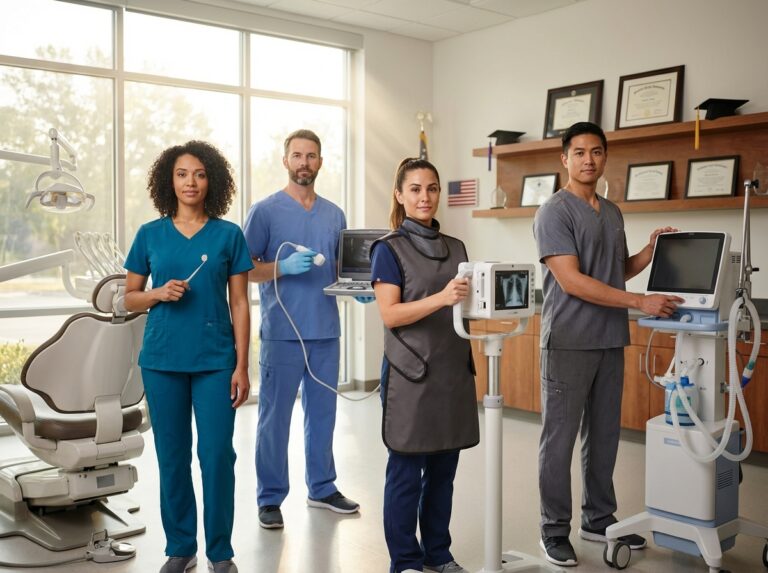
An associate degree can open fast, well-paid career paths in allied health. This article identifies the highest-paying associate-level allied health roles, explains how pay varies by specialty, state and employer, and shows how to compare U.S. allied health schools and programs by cost, accreditation, admissions and outcomes so you can choose a program that maximizes earning potential.
Top associate-level allied health careers that tend to pay the most
When you’re ready to move beyond entry-level roles and into a career with significant earning potential, an associate degree is your key. These programs are focused, fast, and lead directly to well-paying jobs that are in high demand. Below are some of the top-paying allied health careers you can enter with a two-year degree, ordered from highest typical pay to strong competitive wages.
Radiation Therapist
These highly specialized professionals administer radiation treatments to patients with cancer, following plans prescribed by radiation oncologists. They are a critical part of the oncology team, working almost exclusively in hospitals, cancer treatment centers, and outpatient clinics. An associate degree from a JRCERT-accredited program is the standard, typically taking two years and involving over 1,000 hours of clinical practice. Licensure is required in most states, along with ARRT certification in Radiation Therapy (T). Employers seek candidates with exceptional technical skill, deep empathy, and extreme attention to detail. Pay is significantly higher in metropolitan areas and states with high costs of living like California and New York. The median annual wage was $98,300 as of May 2023. To verify current figures, consult the BLS Occupational Outlook Handbook, your state’s labor department wage data, and the American Society of Radiologic Technologists (ASRT) salary surveys. Growth opportunities include becoming a lead therapist, clinical instructor, or pursuing a bachelor’s degree to move into medical dosimetry, which commands an even higher salary.
Nuclear Medicine Technologist
Nuclear medicine technologists prepare and administer radioactive drugs, called radiopharmaceuticals, to patients for diagnostic imaging or therapeutic purposes. They operate specialized cameras that detect the radiation to create images of organs or body areas. They primarily work in hospitals, with some positions in physicians’ offices or outpatient imaging centers. An associate degree from a JRCNMT or CAAHEP-accredited program takes about two years, including extensive clinical hours. Certification from the ARRT (N) or the Nuclear Medicine Technology Certification Board (NMTCB) is essential, and many states require licensure. Key skills include precision, a strong understanding of physics and chemistry, and adherence to strict patient safety protocols. Geographic pay drivers mirror those in radiation therapy. The median annual salary was $92,500 as of May 2023. For the most current data, check BLS and professional association reports. Specializing as a PET (Positron Emission Tomography) technologist, which involves advanced imaging, often leads to higher pay. Further growth can lead to roles in management, research, or application support for equipment vendors.
Dental Hygienist
Dental hygienists are licensed oral health professionals who provide preventative care, including cleaning teeth, examining patients for signs of oral diseases like gingivitis, and providing education on oral hygiene. They work almost exclusively in dental offices. An associate degree in Dental Hygiene from a CODA-accredited program is required, which usually takes two years. All 50 states require licensure, which involves passing a national written exam and a state or regional clinical exam. Strong manual dexterity, attention to detail, and patient education skills are vital. Pay varies significantly by location, with hygienists in major cities and on the West Coast earning substantially more. The national median wage was $87,530 as of May 2023, but can exceed $120,000 in top-paying areas. Check the BLS and the American Dental Hygienists’ Association (ADHA) for current salary reports. Growth paths include moving into public health, dental sales, research, or education with further schooling. Some hygienists also take on office management roles.
Diagnostic Medical Sonographer
Often called ultrasound technicians, sonographers use high-frequency sound waves to produce dynamic images of organs, tissues, and blood flow. They work closely with radiologists and physicians to help diagnose medical conditions. Common work settings include hospitals, outpatient clinics, and private physician offices. A two-year associate degree from a CAAHEP-accredited program is the standard entry point, requiring 1,500 or more clinical hours. Certification from the American Registry for Diagnostic Medical Sonography (ARDMS) is the industry gold standard. Employers look for strong hand-eye coordination, excellent spatial reasoning, and great interpersonal skills. Pay is highest in outpatient centers and in states like California, Alaska, and Hawaii. The median annual salary was $84,470 as of May 2023. Always verify this with the latest BLS data and surveys from the Society of Diagnostic Medical Sonography (SDMS). Career growth is excellent. Specializing in areas like echocardiography (heart), vascular sonography, or pediatric sonography can increase pay by 10-20%. Experienced sonographers can become lead technologists, department managers, or travel sonographers, which offers premium pay.
MRI Technologist
Magnetic Resonance Imaging (MRI) technologists operate MRI scanners to create detailed cross-sectional images of the body. They position patients, inject contrast dyes when needed, and ensure patient safety around the powerful magnetic field. They work in hospitals and diagnostic imaging centers. While some enter the field after completing a radiologic technology program, dedicated associate degree programs in MRI are available. These programs take about two years. Certification from the ARRT in MRI (MR) is the standard credential employers seek. Key skills are patient care, technical proficiency with complex equipment, and a strong understanding of anatomy. Pay is driven by demand in urban and suburban areas. The median annual salary was $80,090 as of May 2023, but experienced technologists in high-demand locations can earn much more. Use BLS and ASRT data for verification. Growth can come from specializing in advanced techniques like functional MRI (fMRI), taking on supervisory roles, or becoming a travel MRI tech, which often includes high weekly stipends and pay exceeding $3,000 per week.
Respiratory Therapist
Respiratory therapists care for patients with breathing or cardiopulmonary disorders. They manage ventilators, administer breathing treatments, and respond to respiratory emergencies. The vast majority work in hospitals, from the emergency room to the neonatal intensive care unit. An associate degree from a CoARC-accredited program is the minimum requirement, taking about two years. Graduates must pass exams from the National Board for Respiratory Care (NBRC) to earn the Certified Respiratory Therapist (CRT) and then the Registered Respiratory Therapist (RRT) credential. The RRT is the standard for hospital employment and offers higher pay. Critical thinking, problem-solving, and composure in emergencies are essential skills. Pay is often higher in large hospital systems and for those working night shifts or in critical care. The median salary was $77,930 as of May 2023, with projected job growth around 13%. Verify with BLS and NBRC data. Growth opportunities are plentiful, including specializing in neonatal/pediatric care, becoming a pulmonary function technologist, or moving into management or education. Advanced certifications like ACLS or PALS also boost earning potential.
Cardiovascular Technologist
These technologists assist physicians in diagnosing and treating heart and blood vessel ailments. The field is split into two main areas. Noninvasive technologists conduct tests like electrocardiograms (EKGs) and stress tests. Invasive technologists, or cath lab techs, assist with cardiac catheterization procedures. They work in hospitals, particularly in cardiac catheterization labs, and outpatient cardiology clinics. An associate degree from a CAAHEP-accredited program is the typical path, lasting about two years. Certification from Cardiovascular Credentialing International (CCI) is highly recommended. Employers value a calm demeanor under pressure, technical skill, and critical thinking. Pay is higher for invasive technologists due to the complexity and risk of the procedures. The median wage was $67,260 as of May 2023, but invasive specialists in busy hospital systems can earn significantly more. Check BLS and CCI for current wage information. Career growth includes specializing in electrophysiology (EP), becoming a lead technologist, or moving into a management position within a cath lab.
How to compare allied health schools and programs to maximize earnings and outcomes
Choosing the right associate degree program is the single most important decision you’ll make in launching a high-paying allied health career. Two programs that look identical on paper can lead to vastly different financial outcomes. One might leave you with a six-figure job offer before graduation, while another leaves you with debt and a struggle to get certified. The key is knowing exactly what to look for and which questions to ask. Think of it as investigating an investment, because that’s what your education is.
The absolute first filter for any program is programmatic accreditation. This is non-negotiable. If a program isn’t accredited by the recognized body for its field, you may be ineligible to sit for the mandatory certification exams, which means you won’t be able to get licensed and won’t get a job. It’s that simple. For example, a diagnostic medical sonography program must be accredited by the Commission on Accreditation of Allied Health Education Programs (CAAHEP) for you to be eligible for the American Registry for Diagnostic Medical Sonography (ARDMS) exams. For radiography, it’s the Joint Review Committee on Education in Radiologic Technology (JRCERT). For respiratory therapy, it’s the Commission on Accreditation for Respiratory Care (CoARC). Accreditation ensures the curriculum and clinical training meet national standards.
Once you’ve confirmed accreditation, it’s time to analyze the numbers that determine your return on investment. Don’t just look at the sticker price for tuition. You need to request the total cost of attendance, which includes fees, books, uniforms, lab supplies, and certification exam costs. Then, ask the financial aid office for the median student loan debt for graduates of that specific program. A top-tier program at a community college might cost $15,000 total, while a private for-profit school could be over $50,000 for a similar degree, leading to much higher debt.
The most critical step is to evaluate a program’s outcomes with cold, hard data. Do not accept vague answers. You need to ask for these specific figures, preferably for the last three graduating classes to see a trend.
- Graduation Rate What percentage of students who start the program finish it? A low rate can be a red flag for poor student support or an overwhelming curriculum.
- First-Time Certification Pass Rate This is a huge indicator of program quality. How many graduates passed their board exams on the first try? Top programs consistently report pass rates of 90% or higher. A rate below 85% warrants serious questions.
- Job Placement Rate Ask for the percentage of graduates employed in their field of study within six months of graduation. A rate above 90% shows the program has strong employer connections and produces sought-after graduates.
- Median Starting Salary While the previous chapter gave you national averages, ask the program for the self-reported median starting salary of their most recent graduating class. This gives you a realistic local picture.
Beyond the numbers, the quality of your hands-on training is paramount. A program’s clinical affiliations directly impact your employability. A program with partnerships at major trauma centers, specialized outpatient clinics, and respected regional hospitals offers a much richer experience than one that only uses a single community hospital. This diversity not only looks great on a resume but also exposes you to different technologies and patient populations, making you a more adaptable and skilled practitioner.
Finally, consider how the program fits your life and be realistic about its structure. Many programs offer evening or accelerated options, but these are intense. If a program advertises “hybrid” or “online” components, clarify exactly what that means. The classroom (didactic) portion may be online, but the clinical hours, which can be over 1,500 hours for some fields, will always be in-person at a healthcare facility. Also, investigate the student support services. Do they offer dedicated career placement assistance, resume workshops, and mock interviews specifically for allied health students? Strong employer networks are often built through these services.
State licensure can also impact your earnings and mobility. While your certification from a body like the ARRT or NBRC is national, each state has its own licensing board with specific requirements. A program in one state should prepare you for licensure there, but if you plan to move, you must check the requirements of your target state. Some states, like California, have very particular clinical hour or coursework requirements that may not be met by every out-of-state program.
When you talk to program coordinators and potential clinical partners, be prepared with pointed questions.
- What is your first-time pass rate on the [insert specific exam, e.g., NBRC, ARDMS] for the 2023, 2024, and 2025 graduating classes?
- Can you provide a list of your current clinical affiliation sites? How are students assigned to these sites?
- What is the typical student-to-instructor ratio during clinical rotations?
- What percentage of your 2024 graduates were employed in the field within six months of passing their boards?
- What specific resources does your career services department offer to students in this program?
Choosing the right program is an active process of investigation. By focusing on accreditation, quantifiable outcomes, and the quality of clinical training, you can select a program that not only gives you a degree but also maximizes your earning potential from day one.
Strategies to increase earnings with an associate degree in allied health
An associate degree in allied health is a powerful launchpad, not a final destination for your earnings. Once you have your diploma and initial certification, you can start making strategic moves to significantly increase your income. These tactics range from immediate actions you can take in your first year to long-term plans that build a high-earning, resilient career.
The fastest way to boost your pay is by earning advanced or specialty certifications. Employers often pay a premium for specialized skills that meet specific patient needs. Think of your initial credential as a general license and each additional certification as a high-value endorsement.
- Diagnostic Medical Sonographers
After earning your initial Registered Diagnostic Medical Sonographer (RDMS) credential, you can pursue specialties like Registered Diagnostic Cardiac Sonographer (RDCS) for echocardiography or Registered Vascular Technologist (RVT). These can increase your salary by 10% to 20% and make you a top candidate for positions in cardiology or vascular clinics. - Respiratory Therapists
While the Certified Respiratory Therapist (CRT) is the entry-level credential, earning the Registered Respiratory Therapist (RRT) status is the single most important step you can take. Many hospitals now require it for higher-level positions and it can result in a pay increase of over $10,000 per year. - Radiologic Technologists
An A.S. in Radiologic Technology is a gateway to several lucrative specializations. Cross-training and getting certified in modalities like Computed Tomography (ARRT(CT)) or Magnetic Resonance Imaging (ARRT(MR)) can dramatically increase your earning potential. MRI technologists, in particular, are among the highest-paying associate-level professionals.
Your work schedule and setting also play a huge role in your take-home pay. Hospital-based roles often come with opportunities for shift differentials, which can add 20% or more to your base hourly rate for working evenings, nights, or weekends. Overtime is also more common in 24/7 facilities. However, for the highest base salary, look beyond traditional hospitals. Outpatient imaging centers, specialty surgical centers, and private clinics frequently offer 10% to 15% higher pay because they have lower overhead and focus on high-demand procedures. For maximum earnings, consider travel or contract work. Staffing agencies place skilled technologists in short-term assignments across the country, often paying double the standard hourly rate plus a housing stipend. A travel MRI technologist, for example, can earn over $3,000 per week.
Where you live can be as important as what you do. Wages for allied health professionals vary significantly by state and even by metro area. States like California, Alaska, Washington, and New York consistently offer the highest salaries to offset a higher cost of living. A dental hygienist in California might earn a median salary of $120,000, far above the national median of around $87,530. Before making a move, always calculate the return on investment.
Relocation ROI Checklist
Projected Salary Increase minus (Increased Cost of Living + Moving Expenses + New Licensure Fees) = Net Financial Gain. If the gain is substantial and the location fits your lifestyle, it’s a move worth considering.
Never accept the first salary offer without a conversation. Research the salary benchmarks for your specific role, certifications, and geographic area using resources like the Bureau of Labor Statistics (BLS) Occupational Outlook Handbook. When negotiating, cite the 75th or 90th percentile data for your area if your skills and experience align. Also, consider the full compensation package, including health insurance, retirement contributions, and paid time off. Joining a professional association like the American Society of Radiologic Technologists (ASRT) or a healthcare union where available can provide access to salary surveys and collective bargaining power that leads to better pay and benefits.
Finally, think about your long-term trajectory. Your associate degree is a stepping stone. Maintaining your certifications through continuing education is non-negotiable for staying employed and relevant. Many employers offer tuition reimbursement to help you advance your education. Look into online “bridge” programs that allow you to apply your associate degree credits toward a Bachelor of Science (BS). A bachelor’s degree can open doors to roles in management, education, or advanced clinical practice, creating a path for sustained salary growth throughout your career.
Evaluating a New Certification Checklist
- Market Demand
Search job boards for your desired role. How many listings require or prefer the certification? - Cost vs. Benefit
What is the total cost (exam fees, study materials, training)? What is the average salary increase for professionals with this credential, according to BLS and professional association data? - Timeline
How long will it take to study for and pass the exam? Plan to take specialty exams within 6 to 18 months of graduating to build on your fresh knowledge.
Frequently asked questions about associate-level allied health careers
Navigating the path to a high-paying allied health career can bring up a lot of questions. After exploring strategies to maximize your earnings, you might be wondering about the fundamental steps of getting started. Here are answers to some of the most common questions prospective students ask.
Do these jobs require state licensure or national certification?
Yes, virtually all of them do. This is non-negotiable for practicing legally and safely. For example, dental hygienists must be licensed in every state, which involves passing a national board exam and a state-specific clinical exam. Fields like diagnostic medical sonography, radiation therapy, and respiratory therapy require passing a national certification exam from bodies like the ARDMS, ARRT, or NBRC, respectively. Always check the specific requirements of the state licensing board where you plan to work before you even apply to a program.
Why does pay vary so much by state and facility?
Compensation is influenced by several key factors. Cost of living is a major one; a higher salary in New York City or San Francisco reflects the higher expense of living there. Local market demand also plays a huge role. A region with a shortage of MRI technologists will offer more competitive wages. Finally, the type of facility matters. Outpatient imaging centers and specialty clinics often have higher reimbursement rates and can offer salaries 10-15% higher than large, traditional hospitals.
Can I complete an entire allied health associate degree online?
No. While many programs offer hybrid options where you can complete coursework and lectures online, the clinical component is hands-on and must be done in person. You simply cannot learn to perform an ultrasound, administer respiratory treatments, or assist in surgery from behind a computer screen. These careers are built on practical, patient-facing skills that require hundreds or even thousands of hours of supervised training in a real healthcare setting.
Are associate degree graduates competitive against those with bachelor’s degrees?
For these specific technical roles, yes. An associate degree is the industry standard for entry-level positions like radiologic technologist and dental hygienist. Employers are primarily concerned with your clinical competency and your national certification. An applicant with an associate degree and an ARRT certification is just as qualified for a radiographer job as someone with a bachelor’s degree. A bachelor’s might become an advantage later if you pursue management or education roles, but it is not necessary to land a great first job.
How long do these associate degree programs typically take?
Most full-time programs are designed to be completed in about two years, or five to six academic semesters. This 18-to-24-month timeline is structured to include all the necessary classroom instruction and intensive clinical rotations required for you to be eligible for your certification exams upon graduation.
What are the typical clinical hour requirements?
The required hours vary widely by specialty. A diagnostic medical sonography program might require 1,500 or more clinical hours to master the skill. Respiratory therapy and radiologic technology programs often require between 800 and 1,200 hours. These hours are integrated throughout your program and are essential for developing the real-world skills employers expect.
How can I verify a program’s certification pass rates?
This is a critical indicator of a program’s quality. You should ask the admissions department for their first-time pass rates on the national certification exam for the last three years. A strong program will be proud to share this data. If they are hesitant, consider it a red flag. You can sometimes cross-reference this information on the website of the program’s accrediting body. Aim for programs with pass rates consistently above the national average, ideally over 90%.
What financing and scholarship options are available?
Start by filling out the FAFSA (Free Application for Federal Student Aid) to determine your eligibility for federal grants and loans. Many of these programs are offered at community colleges, which keep tuition costs down. Beyond that, search for scholarships offered by professional organizations. The American Society of Radiologic Technologists (ASRT) and the American Dental Hygienists’ Association (ADHA), for example, offer scholarships specifically for students in their fields.
Are there fast-track or bridge programs for working adults?
Yes, schools recognize that many students are balancing work and family. Look for programs with evening or part-time schedules. Additionally, “bridge” programs are common. For instance, a certified medical assistant might find an accelerated path to an associate degree in nursing. These programs are designed to build on your existing healthcare knowledge to get you to the next level more efficiently.
What are realistic entry-level salary ranges, and where can I find current wage data?
A realistic entry-level salary is typically in the 10th to 25th percentile range for that profession. For a radiation therapist, where the median salary is around $98,300, a new graduate might expect to start in the $70,000 to $80,000 range, depending on the location. Your most reliable source for wage data is the U.S. Bureau of Labor Statistics’ Occupational Outlook Handbook. It provides detailed, up-to-date salary information broken down by state and metropolitan area.
How important is a program’s accreditation?
Accreditation is absolutely essential. Graduating from a program accredited by the recognized body for that field (such as CAAHEP for sonography or JRCERT for radiography) is a prerequisite for sitting for your national certification exams. It is your assurance that the program meets rigorous educational standards and will actually qualify you to work in your chosen profession. Do not consider an unaccredited program.
Final takeaways and recommendations
You’ve now explored the landscape of high-paying allied health careers achievable with just an associate degree. Let’s pull everything together into a clear, actionable roadmap to help you move from research to reality. Making the right choice requires synthesizing all this information and focusing on the factors that truly matter for your future success and financial well-being.
First, let’s recap the front-runners for earning potential. The data consistently shows that a few specific fields offer the most lucrative starting points. Radiation therapists often lead the pack, with median annual salaries pushing toward the $100,000 mark. Close behind are nuclear medicine technologists and dental hygienists, both commanding salaries well above the national average for associate-level jobs. Diagnostic medical sonographers and MRI technologists also represent exceptionally strong, high-demand career paths with excellent income potential right after graduation. While salaries vary by location and employer, these professions form the top tier of earning power for two-year degree holders in healthcare.
As you begin comparing schools, remember that not all programs are created equal. The most important metric is not the fanciness of the campus or the marketing materials, but the program’s outcomes. Prioritize these three data points above all else.
- Accreditation. This is non-negotiable. Ensure your program is accredited by the recognized body for that profession (e.g., CAAHEP for sonography, JRCERT for radiography, CODA for dental hygiene). Accreditation is your ticket to sitting for certification exams and obtaining state licensure.
- Certification Pass Rates. Ask for the program’s first-time pass rate on the national certification exam. A strong program will proudly display rates of 90% or higher. This number is a direct reflection of how well the curriculum prepares students for professional practice.
- Job Placement Rates. Look for the percentage of graduates who are employed in their field within six to twelve months of graduation. A rate above 90% indicates that the program has strong industry connections and a solid reputation among local employers.
Beyond these core metrics, consider the total cost of attendance versus the realistic starting salary in your area to calculate your potential return on investment.
Once you graduate and earn your credentials, your ability to increase your income quickly depends on strategic choices. Don’t just accept the first offer that comes your way. Consider these proven strategies to boost your earnings from day one. Pursue advanced certifications in a specialty area. For example, a sonographer with credentials in both general and vascular imaging is far more valuable than one with a single certification. Be willing to work less desirable shifts. Hospitals often pay a significant differential, sometimes 20% or more, for evening, night, or weekend shifts. Finally, be geographically flexible if possible. Relocating to a high-demand, high-wage state like California, Alaska, or Washington can increase your annual salary by tens of thousands of dollars compared to other regions. Travel allied health positions also offer premium pay, often doubling the weekly income of a staff position.
Your journey starts now. The information in this article is your foundation, but the next steps require personalized research.
- Compare Programs. Use online school comparison tools to create a shortlist of accredited programs. Filter them by cost, admission requirements, and, most importantly, the outcome metrics we discussed.
- Verify State Requirements. Go directly to your state’s licensing board website (e.g., the state board of nursing or department of health). Understand the exact educational, clinical, and examination requirements you must meet to practice legally. These rules can vary significantly from state to state.
- Consult Authoritative Data. Before making a final decision, cross-reference your salary and job growth expectations with the latest government data. Things change, and you need the most current information available.
To help you, here are a few essential resources to bookmark and use as you finalize your plans.
- School Comparison Portals. Websites like EduMed.org or AllAlliedHealthSchools.com offer searchable databases of programs across the country.
- Bureau of Labor Statistics (BLS). The Occupational Outlook Handbook is the gold standard for unbiased information on pay, job duties, and projected growth for hundreds of occupations.
- State Licensing Boards. A simple search for “[Your State] Board of Dental Hygiene” or “[Your State] Board of Respiratory Care” will lead you to the official source for licensure rules.
- Professional Associations. Organizations like the American Society of Radiologic Technologists (ASRT), the American Registry for Diagnostic Medical Sonography (ARDMS), or the American Dental Hygienists’ Association (ADHA) provide career resources, salary surveys, and networking opportunities.
By taking these deliberate, informed steps, you can confidently choose a path that not only leads to a rewarding career helping others but also provides a strong financial future.
References
- Top 10 Highest-Paying Allied Health Specialties for 2025 — Projected Top 10 Allied Health Specialty Salaries in 2025 · 1. Perfusionist · 2. Dosimetrist · 3. Pediatric Echocardiographer · 4. Pathologists' …
- 15 Highest Paying Jobs in the Medical Field That Only Require an … — 15 highest-paying jobs in the medical field with an associate degree · 1. MRI technologist · 2. Veterinary technician · 3. Pharmacy technician · 4.
- Guide to salaries for allied health professionals — Medical Records Specialist: $50,250 · What you'll do: As a medical records specialist, you'll organize health data for a medical facility. · What …
- 11 Types of Healthcare Degrees You Can Earn in 2 Years or Less — Physical therapist assistant was ranked #4 on U.S. News' list of Best Healthcare Support Jobs for 2025. … higher paying jobs, such as a dental hygienist.
- Healthcare Occupations – Bureau of Labor Statistics — Cardiovascular technologists and technicians conduct tests and assist in procedures involving the heart or lungs. Associate's degree, $67,260.
- The 12 Fastest-Growing Allied Health Careers – EduMed.org — The 12 Most In-Demand Allied Health Professions · 1. Speech-Language Pathologists · 2. Occupational Therapists · 3. Diagnostic Medical Sonographers.
Legal Disclaimers & Brand Notices
Medical Disclaimer: The information provided in this article is for informational and educational purposes only, focusing on career paths, educational requirements, and salary expectations within the allied health field. This content is not intended to be a substitute for professional medical advice, diagnosis, or treatment. Always seek the advice of a qualified healthcare provider or licensed professional regarding any medical condition, procedure, or health-related decision.
Trademark Acknowledgement: All organizational names, certifications, logos, and brands mentioned, including those related to professional and accrediting bodies (such as ARRT, NBRC, CAAHEP, JRCERT, CODA, ARDMS, NMTCB, and CCI), are the property of their respective owners. The use of these names, trademarks, and brands does not imply endorsement or affiliation.